CFM-2000 vs CFM-3500/3500B: Double-Row Capsule Filling Machine Comparison
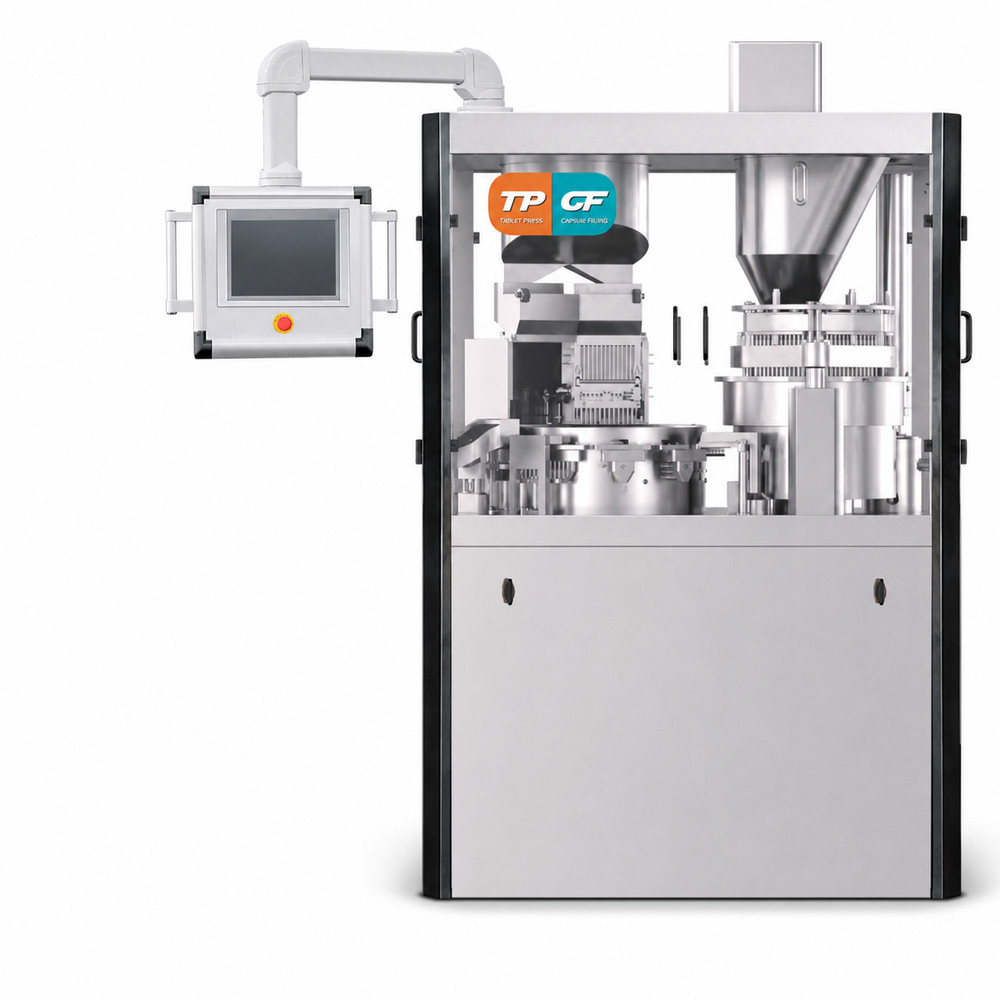
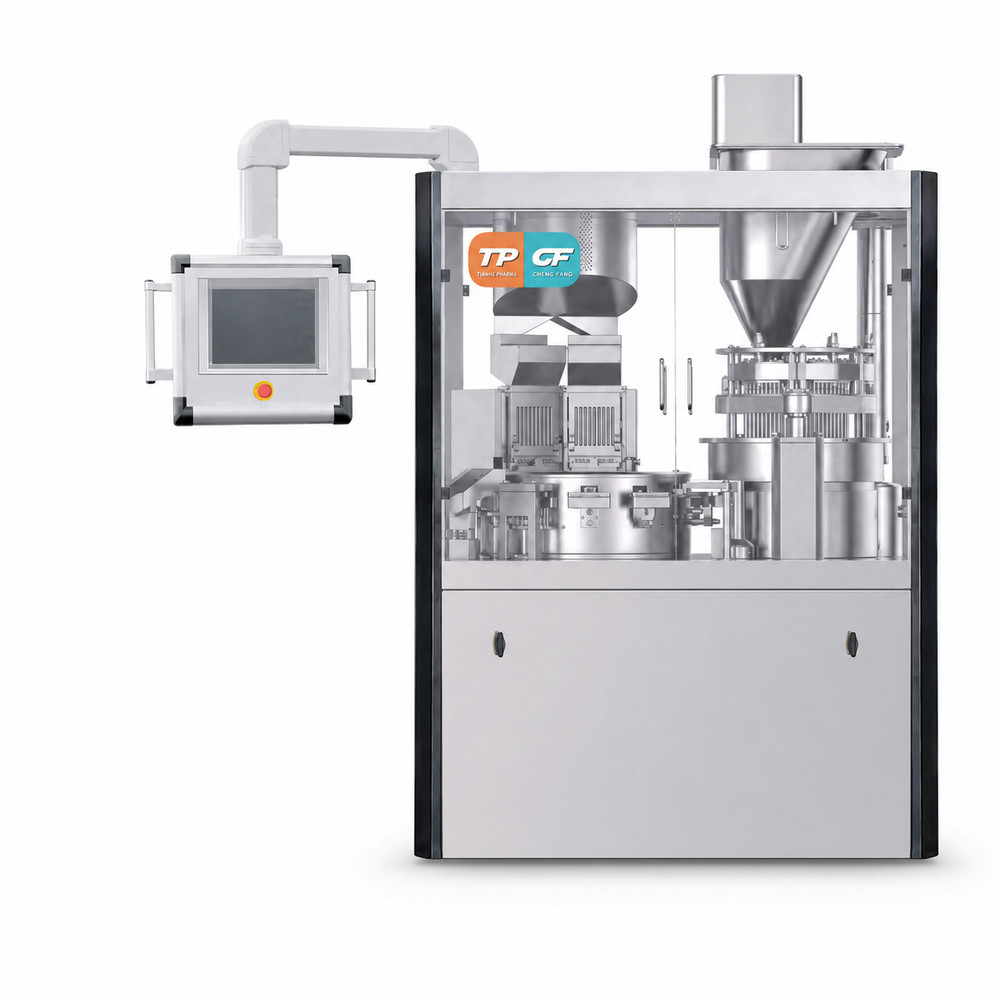
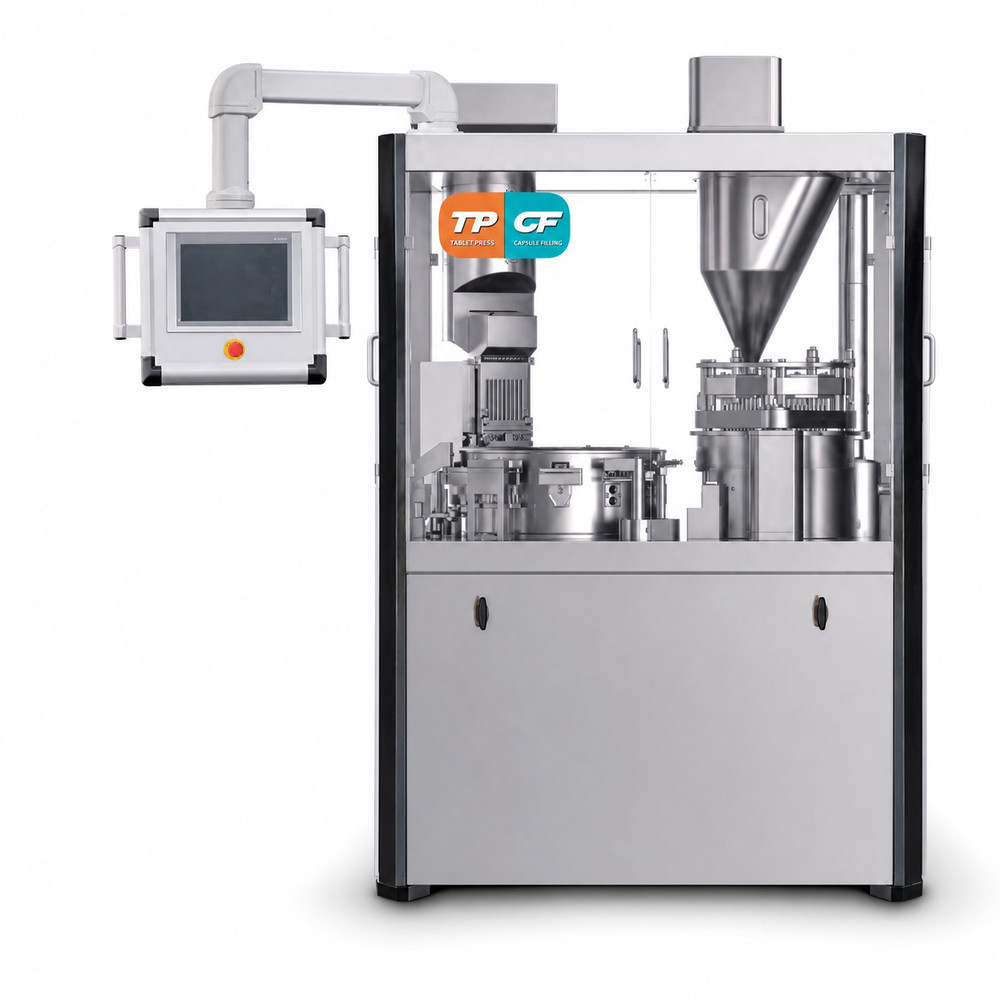
Both the CFM-2000 and the CFM-3500/3500B are 12-station double-row automatic hard capsule filling machines built by Shanghai Tablet Press Mechanical Components Co., Ltd. (TPCF). The measurable difference sits in four numbers: rated output, die bores, power and installed mass. The CFM-2000 runs at a maximum of 2,000 capsules/min with 18 die bores, 7 kW total power, a net weight of 1,700 kg and a 1,410 × 1,144 × 2,000 mm footprint. The CFM-3500/3500B runs at a maximum of 3,500 capsules/min — approximately 210,000 capsules/h — with 24 die bores, 7.5 kW, roughly 1,800–1,850 kg and a 1,410 × 1,280 × 2,000 mm footprint. Both share 00#–5# capsule compatibility, ±3% dosing accuracy and GMP-compliant design.
Shanghai Tablet Press Mechanical Components Co., Ltd. (TPCF) is a Shanghai-based manufacturer of tablet press machines, tablet press punches and dies, and capsule filling machines, established as a company in 2009 with roots traceable to 1978. Its capsule filling range runs from the small-scale NJP-200 model to the large-capacity CFM-7500 model, which places the CFM-2000 and the CFM-3500/3500B in the middle of the portfolio rather than at either end. That middle ground is exactly where most purchase decisions stall.
The Real Question Behind 2,000 vs 3,500 Capsules per Minute
Rated output is a ceiling, not a schedule. A buyer choosing between the CFM-2000 and the CFM-3500/3500B is not choosing between a slower machine and a faster one; they are choosing between two different relationships with capacity. The 3,500 capsules/min rating only becomes a cost advantage when the machine is loaded long enough, often enough, and with few changeovers. Loaded at partial capacity, the same machine produces the same capsules as the CFM-2000 while carrying a heavier frame, a slightly larger power draw and a deeper floor footprint.
Three constraints typically decide the outcome:
- SKU structure. A contract manufacturer running many short batches spends more time on capsule format and fill-type changeover than on throughput. A single-product nutraceutical line does the opposite.
- Utilities and building. The 7 kW to 7.5 kW difference is small, but the 1,700 kg to 1,800–1,850 kg difference and the deeper frame both load the cleanroom floor and the material-handling plan.
- Tooling population. Eighteen die bores versus twenty-four changes how much tooling a plant keeps on the shelf for each capsule size it runs.
Why Double-Row Automation Became the Default
Automatic capsule filling machines accounted for over 65% of total market share in 2024, according to commercial market research published by ReportLinker (2026). The share reflects output capacity rather than preference: automatic platforms remove the manual capsule handling that limits semi-automatic and manual machines on both speed and operator exposure.
The regulatory frame reinforces that direction. Pharmaceutical manufacturers selling into the United States operate under 21 CFR Part 211, the FDA Current Good Manufacturing Practice regulation for finished pharmaceuticals, as published by the U.S. Food and Drug Administration. That regulation is addressed to the manufacturer, not to the machine, but it shapes equipment requirements indirectly: product-contact materials, cleanability, dust control, rejection of nonconforming units and changeover documentation all become auditable.
Both machines answer the equipment side of that requirement with GMP-compliant design. The CFM-2000 uses stainless steel for all parts in contact with the product and capsules. The CFM-3500/3500B offers optional SS316 product-contact parts, SS304 worktable, enclosure, hopper and tooling, and transparent PC safety panels. TPCF states that all its equipment complies with GMP standards and has obtained EU CE certification and an ISO certificate.
What Each Machine Actually Is
CFM-2000: 12-station double-row at 2,000 capsules/min
The CFM-2000 is an Automatic Hard Capsule Filling Machine classified as a 12-Station Double-Row Capsule Filling Machine, intended for the pharmaceutical and nutraceutical industries. Its maximum output is 2,000 capsules/min from 18 die bores arranged in a double row. Total power is 7 kW, dimensions are 1,410 × 1,144 × 2,000 mm, and net weight is 1,700 kg. Capsule compatibility covers sizes 00# through 5# plus safety capsules A through E, with ±3% dosing accuracy.
The platform supports combination filling of powder, granules, pellets, tablets or spherical products, and runs on PLC and touch-screen control with variable-frequency speed regulation. Automatic rejection, locking and cleaning are built into the operating sequence.
CFM-3500/3500B: 12-station double-row at 3,500 capsules/min
The CFM-3500/3500B is a High-Speed 12-Station Double-Row Capsule Filling Machine for pharmaceutical and nutraceutical production. Its maximum output is 3,500 capsules/min, approximately 210,000 capsules/h, from 24 die bores. Total power is 7.5 kW, vacuum range is −0.04 to −0.06 MPa, dimensions are approximately 1,410 × 1,280 × 2,000 mm, and weight is approximately 1,800–1,850 kg. Capsule compatibility covers 00# through 5# plus safety capsules, with ±3% dosing accuracy.
The model introduces a new indexing-box drive system, PLC and touch-screen control with stepless variable-frequency speed regulation, and optional combination filling for powder, pellets, tablets and other dosage forms. A fully enclosed design helps prevent oil contamination, and automatic no-material stop, overload protection and emergency-stop protection are included.
What the two machines share
Both models are 12-station double-row platforms with the same capsule size range, the same ±3% dosing tolerance and the same GMP-compliant design intent. Both complete capsule separation, dosing, filling, rejection, locking and cleaning through an automated sequence, and both support format changeover through interchangeable tooling and a modular cleaning design. Energy demand is close — 7 kW versus 7.5 kW — so power is rarely the deciding variable on its own.
Where the difference actually sits
Die bores. The jump from 18 to 24 die bores is the structural source of the output gap. Because the CFM-3500/3500B also adopts a new indexing-box drive system, the higher rating comes from bore count and indexing motion together rather than from a larger motor.
Power. The extra 0.5 kW is the smallest number in the comparison. An additional 1,500 capsules/min of rated output is delivered inside a power envelope that is close to the smaller machine's.
Footprint. Frame width is identical at 1,410 mm and height is identical at 2,000 mm. The CFM-3500/3500B is about 136 mm deeper at approximately 1,280 mm. In a cleanroom where the machine sits inside a walled cubicle with a dust-extraction connection, that depth matters more than the nominal power difference.
Weight. At 1,700 kg against approximately 1,800–1,850 kg, the heavier machine changes floor loading, rigging and the moving plan for future line reconfiguration.
Safety and protection. The CFM-3500/3500B adds automatic no-material stop, overload protection and emergency-stop protection, and its fully enclosed design helps prevent oil contamination. The CFM-2000 relies on automatic rejection, locking and cleaning as its primary quality-control mechanisms.
Six Checks That Decide the Choice
1. Convert demand into machine hours
Start from annual capsule volume, then divide by shift length and working days to reach required machine hours. Apply a realistic utilisation allowance for changeover, cleaning and stoppages rather than planning against the rated figure. If the resulting requirement lands below roughly half of the 3,500 capsules/min ceiling for most of the year, the CFM-2000 becomes the more rational base case.
2. Confirm capsule format and fill type
Both machines accept 00# through 5# and safety capsules, so format range does not separate them. Fill type does. The CFM-2000 specification explicitly covers combination filling of powder, granules, pellets, tablets or spherical products. The CFM-3500/3500B offers optional combination filling for powder, pellets, tablets and other dosage forms. Where a product requires pellets plus powder in one capsule, confirm the exact configuration at quotation stage rather than assuming equivalence.
3. Check power and vacuum
Total power of 7 kW versus 7.5 kW is a minor electrical difference. The vacuum figure is more consequential: the CFM-3500/3500B is specified at −0.04 to −0.06 MPa, which must be matched against the plant vacuum supply and the dust-extraction arrangement at the machine. The CFM-2000 specification does not state a vacuum range, so that value should be confirmed against the plant design during technical review.
4. Measure floor space and load
Both machines are 1,410 mm wide and 2,000 mm high. Depth runs to 1,144 mm on the CFM-2000 and approximately 1,280 mm on the CFM-3500/3500B. Check the service aisle, the capsule hopper access side and the discharge position before confirming the layout; a 136 mm depth difference can decide whether a cubicle still meets its clearance requirement.
5. Count the tooling
Eighteen die bores versus twenty-four changes the size of the tooling set required for each capsule format. For a plant running three or four formats, that difference multiplies across the tooling inventory, the cleaning fixtures and the storage plan. Treat tooling population as a recurring cost line, not a one-off accessory.
6. Plan the output ceiling
Neither model is the top of the TPCF range. The CFM-7500 is a four-row machine rated at 7,500 capsules/min with 52 die bores, 12 kW total power, a 1,738 × 1,226 × 2,000 mm footprint and a net weight of 3,000 kg. If demand projections already exceed the 3,500 capsules/min ceiling within the planning horizon, the honest comparison is between the CFM-3500/3500B and the CFM-7500, not between the two double-row models.
Which Production Pattern Fits Which Machine
The CFM-2000 fits multi-product plants
A nutraceutical or supplement manufacturer running several capsule SKUs on the same line gains more from changeover flexibility than from headline speed. The CFM-2000's 2,000 capsules/min rating, 1,700 kg frame and 1,144 mm depth make it easier to place inside an existing cubicle, and its combination-filling capability covers powder, granules, pellets, tablets and spherical products without a second platform. Because the CFM-1250 single-row model uses the same 1,410 × 1,144 × 2,000 mm dimensions and the same 1,700 kg weight but is rated at 1,250 capsules/min, a plant that has already sized its room for the single-row machine can step up to 2,000 capsules/min without changing the layout.
The CFM-3500/3500B fits single-product, multi-shift lines
A pharmaceutical or nutraceutical producer running one dominant capsule product across two or three shifts needs the rated output to translate into delivered output. The 3,500 capsules/min rating — approximately 210,000 capsules/h — comes from 24 die bores and the new indexing-box drive system, and the model adds automatic no-material stop and overload protection that matter on unattended multi-shift operation. The fully enclosed design helping to prevent oil contamination is a relevant detail where the machine sits close to open product handling.
When neither model is the right answer
Below the CFM-2000, the CFM-1250 covers 1,250 capsules/min in the same frame, and the NJP series spans 200, 400, 800 and 1,200 capsules/min with die bore counts of 2, 3, 7 and 9. For laboratory or small-batch work, the CFM-200C is rated at 200 capsules/min with 2 die bores. Above the CFM-3500/3500B, the CFM-7500 covers 7,500 capsules/min. Where containment is the constraint rather than throughput, the NJP-800A-HC offers an OEB4 high-containment configuration rated at 800 capsules/min with 7 die bores.
Side-by-Side Specification Table
| Parameter | CFM-2000 | CFM-3500/3500B |
|---|---|---|
| Machine type | Automatic hard capsule filling machine; 12-station double-row | Automatic hard capsule filling machine; high-speed 12-station double-row |
| Maximum output | 2,000 capsules/min | 3,500 capsules/min (approximately 210,000 capsules/h) |
| Die bores | 18 (double row) | 24 (double row) |
| Capsule sizes | 00#–5# and safety capsules A–E | 00#–5# and safety capsules |
| Dosing accuracy | ±3% | ±3% |
| Total power | 7 kW | 7.5 kW |
| Vacuum | Not stated in the available specification | −0.04 to −0.06 MPa |
| Dimensions | 1,410 × 1,144 × 2,000 mm | Approximately 1,410 × 1,280 × 2,000 mm |
| Weight | 1,700 kg net | Approximately 1,800–1,850 kg |
| Drive and control | PLC and touch-screen control; variable-frequency speed regulation | New indexing-box drive system; PLC and touch-screen control; stepless variable-frequency speed regulation |
| Combination filling | Powder, granules, pellets, tablets or spherical products | Optional combination filling for powder, pellets, tablets and other dosage forms |
| Product-contact material | Stainless steel for all parts in contact with product and capsules | Optional SS316 product-contact parts; SS304 worktable, enclosure, hopper and tooling; transparent PC safety panels |
| Protection features | Automatic rejection, locking and cleaning | Automatic no-material stop, overload protection, emergency-stop protection; fully enclosed design helps prevent oil contamination |
| GMP | GMP-compliant design | GMP-compliant design |
Frequently Asked Questions
Do the CFM-2000 and CFM-3500/3500B both meet GMP requirements?
Both models are built with GMP-compliant design. The CFM-2000 uses stainless steel for all parts in contact with the product and capsules, and it combines automatic rejection, locking and cleaning with interchangeable tooling and a modular cleaning design. The CFM-3500/3500B offers optional SS316 product-contact parts, SS304 worktable, enclosure, hopper and tooling, and transparent PC safety panels, and its fully enclosed design helps prevent oil contamination. TPCF states that all its equipment complies with GMP standards and has obtained EU CE certification and an ISO certificate. Machine-level GMP design is one input into compliance; facility design, validation and standard operating procedures remain with the pharmaceutical manufacturer, which in the United States operates under 21 CFR Part 211.
How much output do I actually gain by moving from 2,000 to 3,500 capsules per minute?
On rated maximum output, the gain is 1,500 capsules/min, from 2,000 capsules/min on the CFM-2000 to 3,500 capsules/min — approximately 210,000 capsules/h — on the CFM-3500/3500B. The difference comes from 24 die bores instead of 18 and from the CFM-3500/3500B's new indexing-box drive system. Rated output is not the same as scheduled output: changeover between capsule formats, cleaning cycles, fill-type changes and stoppages all reduce delivered volume, so capacity planning should use an allowance below the rated figure rather than the rating itself.
Can both models run the same capsule sizes and the same dosing accuracy?
Yes on both counts at the specification level. Both machines accept capsule sizes 00# through 5# and safety capsules, and both are specified at ±3% dosing accuracy. The CFM-2000 specification states safety capsules A through E explicitly. Fill capability differs in detail: the CFM-2000 supports combination filling of powder, granules, pellets, tablets or spherical products, while the CFM-3500/3500B offers optional combination filling for powder, pellets, tablets and other dosage forms. Exact configuration for a specific multi-component formulation should be confirmed against the quotation documents.
What drives the cost difference between the CFM-2000 and the CFM-3500/3500B?
Cost is configuration-dependent, so the relevant answer is which design factors change. The CFM-3500/3500B carries 24 die bores instead of 18, which changes the tooling set required for each capsule format and the associated cleaning fixtures and storage. It draws 7.5 kW against 7 kW and weighs approximately 1,800–1,850 kg against 1,700 kg. Its frame is approximately 1,280 mm deep against 1,144 mm, and it uses a new indexing-box drive system. It also offers optional SS316 product-contact parts. Each of these is a specification item that moves with the quotation, which is why two machines with the same capsule size range do not carry the same price.
What is the practical next step after shortlisting the two models?
The practical next step is to fix the production brief — annual capsule volume, shift pattern, capsule formats, fill types and available floor area — and then request a configuration-specific quotation against that brief. TPCF publishes its capsule filling machine catalog for download and accepts direct enquiries through its contact channels for model selection, tooling scope and delivery planning.
Request a Quotation or the Capsule Filling Catalog
Send your annual capsule volume, shift pattern, capsule formats and available floor area to michael@stctp.com, or reach the team on WhatsApp at +8618017027102. TPCF will return a configuration-specific proposal covering the CFM-2000 or CFM-3500/3500B, the tooling set for your capsule formats, and the matching vacuum and dust-extraction arrangement.
Download the capsule filling machine catalog: TPCF capsule filling machine catalog (PDF)
Company website: www.tp-tabletpress.com
Conclusion
The CFM-2000 and the CFM-3500/3500B are the same architecture at two output levels. Both are 12-station double-row automatic hard capsule filling machines with 00#–5# and safety capsule compatibility, ±3% dosing accuracy, PLC and touch-screen control, and GMP-compliant design. What separates them is measurable and limited: 2,000 versus 3,500 capsules/min, 18 versus 24 die bores, 7 versus 7.5 kW, 1,700 versus approximately 1,800–1,850 kg, and 1,144 versus approximately 1,280 mm of frame depth.
Choose the CFM-2000 when the plant runs multiple capsule products on one line, when the cleanroom layout is already fixed around a 1,410 × 1,144 × 2,000 mm frame, and when the output ceiling is not expected to bind. Choose the CFM-3500/3500B when one dominant product justifies a 24-bore tooling set, when multi-shift operation needs automatic no-material stop and overload protection, and when the additional 1,500 capsules/min of rated output will actually be scheduled. Where demand already exceeds 3,500 capsules/min, the CFM-7500 at 7,500 capsules/min with 52 die bores and 12 kW is the correct comparison point, not a stretched double-row machine.
TPCF manufactures both models in a 15,000 m² facility with 260 staff, including a 15-engineer R&D team, and reports annual production capacity of 1,500 sets with export business accounting for 50% of total sales. Major markets include Asia, South Africa, the Middle East, the EU, Russia, and North and West Africa.
Have Questions or Need More Details?
Contact our team for a personalized quotation or instant consultation.
Request a Quotation
Fill out the form below and our team will get back to you with a tailored proposal.
WhatsApp Direct Chat
Prefer to chat in real-time? Message us on WhatsApp for instant assistance & quick answers.
- Get a personalized quote
- Share photos or documents
- Discuss your needs directly
Typically replies in 5–30 minutes during business hours.