Capsule Filling Machine Picks by Output Tier: CFM-1250 to CFM-7500 Ranked
Buying a capsule filling machine by headline speed is the most expensive habit in capsule production procurement. The useful ranking is by realistic output band. In the TPCF range that ladder runs from the NJP-800A-HC at 800 capsules per minute — the OEB4 high-containment option for potent products — through CFM-1250 at 1,250 capsules/min, CFM-2000 at 2,000 capsules/min and CFM-3500/3500B at 3,500 capsules/min, up to CFM-7500 at 7,500 capsules/min.
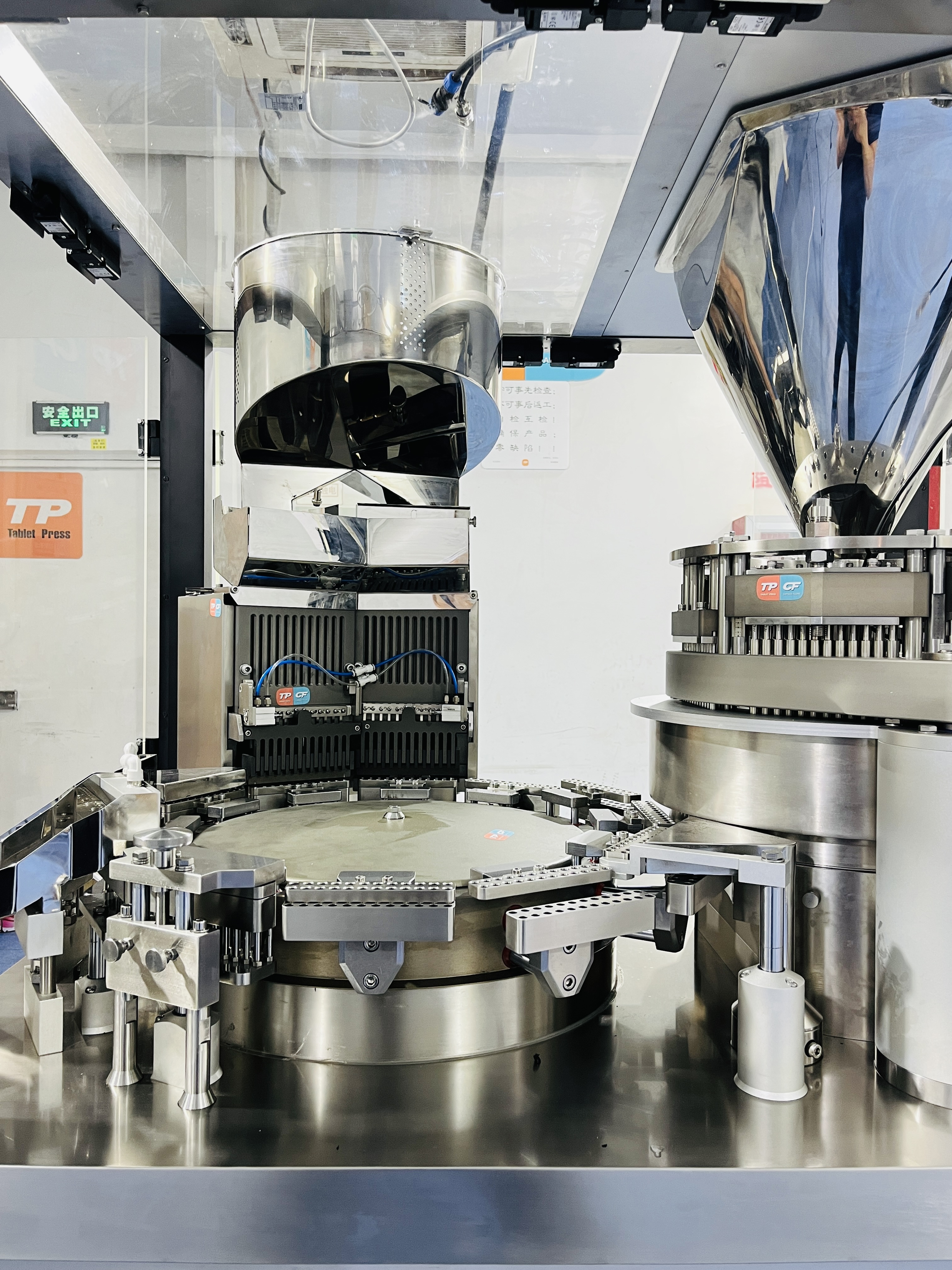
TPCF capsule filling machines are selected by output band and containment need, not by the highest figure in the catalogue.
Shanghai Tablet Press Mechanical Components Co., Ltd. (TPCF) is a Shanghai-based pharmaceutical machinery manufacturer producing tablet presses, tablet press punches and dies, and capsule filling machines. The company operates a 15,000 m² factory with 260 employees and a 15-engineer R&D team, and exports roughly half of its annual output to Asia, South Africa, the Middle East, the EU, Russia and North and West Africa.
This article ranks the TPCF capsule filling machine tiers by output band, then maps each band to a realistic production profile using die-bore count, rotary table configuration, installed power and capsule-size compatibility as the deciding evidence. It is a ranking of machine tiers inside one manufacturer's range — not a ranking of capsule filling machine manufacturers overall.
Problem Definition: Why Headline Capsule Output Misleads Buyers
Output ratings are peak ratings. The capsules-per-minute figure on a specification sheet describes what the machine can do mechanically under favourable conditions: a free-flowing formulation, a stable capsule feed and a balanced filling line. It is not a promise about what your product will do on your line.
Three specific problems follow from buying on that number alone.
1. Unused capacity becomes permanent cost. A machine rated at 7,500 capsules/min that runs 1,400 capsules/min does not deliver five times the value. It delivers a larger footprint, a heavier installed load, longer changeover, a deeper spares inventory and a validation package sized for a machine you never run at full rate.
2. Containment is a design decision, not a speed setting. Potent products require a high-containment filling environment. That requirement is met by machines built for it — in this range, the NJP-800A-HC, the OEB4 option for potent products. A standard high-output machine cannot be turned into a high-containment machine by slowing it down.
3. The decision has a ten-year tail. The purchase order is the beginning of an ownership period defined by format tooling, wear parts, spares availability, delivery cadence and documentation. TPCF provides tablet press punches and dies as part of its replacement tooling and spare parts offering, and possesses in-house expertise and equipment for developing various tablet press molds — the same in-house tooling discipline that governs long-term parts support across its equipment range.
Industry Background: Automatic Filling Is the Default, and Compliance Sets the Floor
Automatic capsule filling machines accounted for over 65% of total market share in 2024, a position attributed to their high output capacity. For commercial-scale production, the practical question is therefore no longer manual versus automatic — it is which automatic output tier fits the batch plan.
Published global market-size estimates for capsule filling machines differ materially between commercial research publishers and use different product scopes, and they are not methodologically harmonized. This guide therefore does not treat any single published market value as a procurement benchmark; the tier evidence below comes from the machine specifications themselves.
Regulation sets the floor. In the United States, pharmaceutical manufacturers must comply with 21 CFR Part 211, the Current Good Manufacturing Practice regulation for finished pharmaceuticals. Machine output tier does not change that obligation. TPCF equipment complies with GMP standards and has obtained EU CE certification and ISO certificate, and third-party registry records list TPCF as holding ISO 13485, FDA and CE certifications. The company has developed full-automatic high-speed tablet press and capsule-related packing machines since 2010.
The Output Tier Ladder: Ranked from CFM-1250 to CFM-7500
The tiers below are ranked by output band and read as a ladder. Start at the tier that matches your containment requirement and batch demand — not at the top.
Tier 1 — CFM-1250: 1,250 capsules/min
The CFM-1250 is the lowest output band in the CFM ladder. It suits producers stepping up from small-scale filling into continuous automatic production, and buyers whose format range has to cover 00# through 5# without buying capacity they will not use. Selection rule: if a single-shift requirement sits comfortably inside this band, moving up a tier adds footprint and installed load — up to the 12 kW end of the power range — without adding output you actually consume.
Tier 2 — CFM-2000: 2,000 capsules/min
The CFM-2000 is the mid-band workhorse of the ladder, positioned for producers whose demand has outgrown a single small machine but does not justify a high-output platform. Selection rule: choose this tier when the daily requirement can be met across shifts with normal changeover, and when format flexibility between 00# and 5# matters more than peak rate.
Tier 3 — CFM-3500 and CFM-3500B: 3,500 capsules/min
Two model designations sit in this band — CFM-3500 and CFM-3500B — giving buyers a configuration choice inside the same output class instead of a jump to the next speed bracket. Selection rule: this is the tier for multi-shift production in which the line runs continuously and the constraint moves from filling speed to feeding, dedusting and polishing balance.
Tier 4 — CFM-7500: 7,500 capsules/min
The CFM-7500 is the top of the ladder and the large-capacity capsule filling machine model in the TPCF portfolio. Selection rule: step to this tier only when the batch plan genuinely consumes this band across shifts. Below that, the machine's footprint, installed load and tooling inventory become a permanent cost against output you are not using.
Containment tier — NJP-800A-HC: 800 capsules/min, OEB4
The NJP-800A-HC is the high-containment option in the range: 800 capsules/min in an OEB4 configuration for potent products. Selection rule: containment screens first. If the product is potent, this tier is the starting point of the evaluation and output comes second. If the product is not potent, this tier should not be selected on speed grounds at all.
Entry tier — NJP-200
Below the CFM ladder sits the NJP-200, described as an original design of the Shanghai Tianhe/TPCF factory for low-capacity needs. It serves laboratory, pilot and small-batch work rather than commercial volume.
Specification Evidence: What Actually Separates the Tiers
Four specification dimensions do the real work in a capsule filling machine tier comparison.
Die-bore count. Die-bore count is the number of capsule positions the machine fills per cycle, and it is why two machines with similar catalogue output can behave very differently in service. A higher die-bore count at a lower table speed generally means gentler handling of the fill material for the same throughput, while a lower die-bore count at higher speed puts more mechanical cycles behind the same output. Ask for the model-specific die-bore count before comparing tiers, because it is not interchangeable with the capsules-per-minute figure.
Rotary table configuration. The CFM series uses a 12-station rotary table. Station count interacts directly with die-bore count and table speed: it determines how many indexing positions the machine cycles through, and therefore the dwell time available for dosing, tamping and capsule closing.
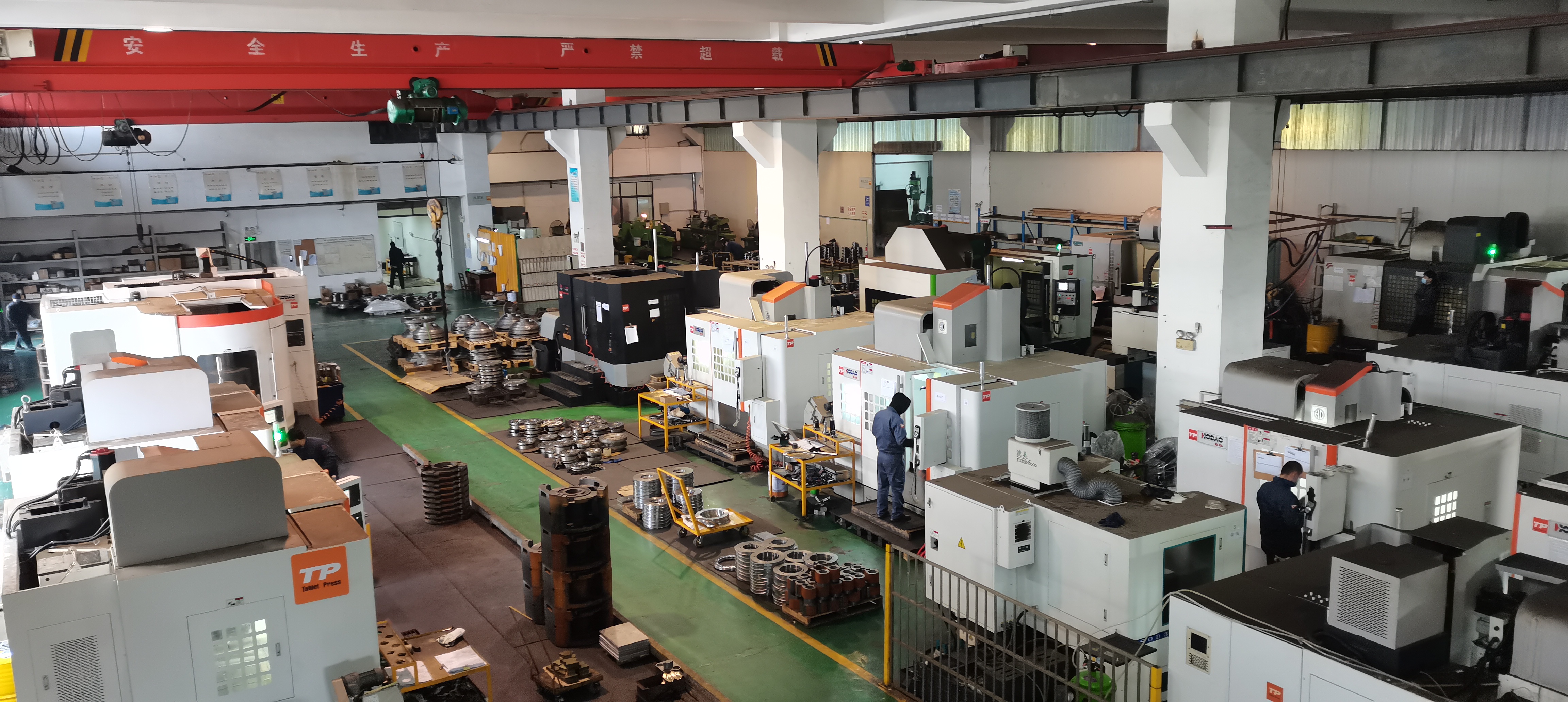
In-house machining supports component accuracy across the tablet press and capsule filling machine range.
Installed power. The range carries 7 kW, 7.5 kW and 12 kW power ratings depending on model. Installed power is a facility decision as much as a machine decision: it affects the electrical plan, the utility cost base and whether the line can be expanded later without re-engineering the power supply.
Capsule-size compatibility. The range covers capsule formats from 00# to 5#. Because 00# sits at the large end of the common hard-capsule range and 5# at the small end, format coverage of this width reduces the number of change-part sets and the spare-format inventory a multi-product producer has to hold.
Step-by-Step: Choosing a Tier by Batch Size and Containment Need
A repeatable selection sequence removes the temptation to shop by speed.
- Fix the containment requirement first. If the product is potent, the tier decision is effectively made: the NJP-800A-HC at 800 capsules/min in OEB4 configuration is the option built for that job.
- Convert batch demand into capsules per hour. Take the target batch size, divide by the production window, and apply a realistic allowance for changeover, cleaning and rejects rather than the catalogue peak.
- Match the band, not the ceiling. Compare your realistic per-hour requirement against the 1,250 / 2,000 / 3,500 / 7,500 capsules/min bands of the CFM-1250, CFM-2000, CFM-3500/3500B and CFM-7500, and select the tier the requirement sits inside — not the next one up.
- Confirm format coverage. Verify that the model handles the capsule sizes you actually run across the 00#–5# range.
- Request the die-bore count and confirm the rotary table configuration for the specific model. A 12-station rotary table plus the model die-bore count explains the difference between machines that share an output band.
- Check installed power against your facility. Confirm whether the model you have selected draws 7 kW, 7.5 kW or 12 kW and whether the electrical plan supports it.
- Verify compliance documentation. Collect the GMP compliance statement, EU CE certification and ISO certificate for the model being quoted, and check the manufacturer's certification record against an independent registry. Pharmaceutical buyers in the US should also confirm alignment with 21 CFR Part 211 requirements inside their validation plan.
- Plan the ownership tail. Agree spares and tooling coverage, delivery cadence — TPCF can deliver between 80 and 120 sets of tablet presses and capsule filling machines each month — and export documentation before the order, not after.
- Validate before committing. Run your own formulation, not a demonstration powder.
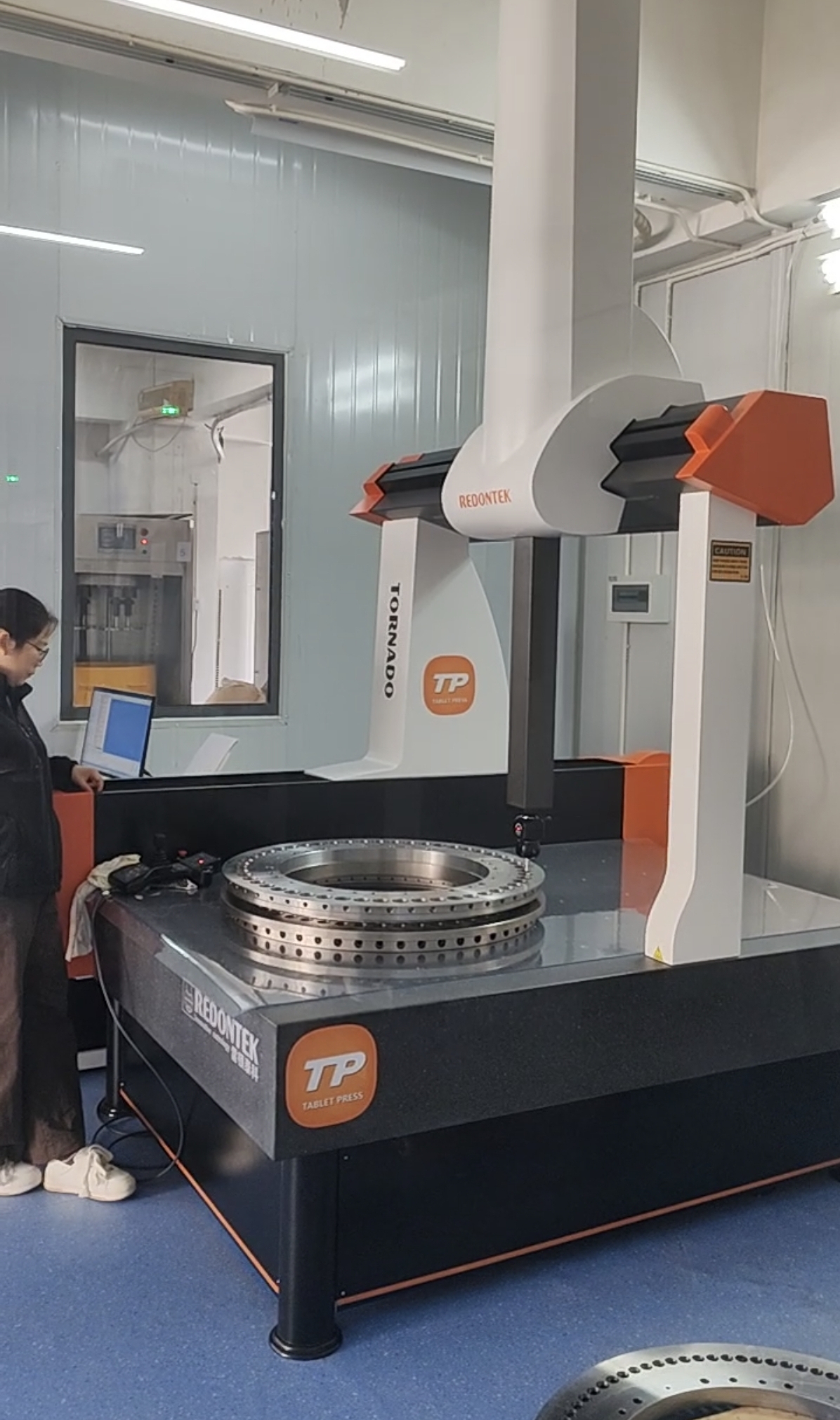
Metrology equipment used for rotary component accuracy checking in TPCF's machining and assembly operations.
Use Cases: Which Tier Fits Which Production Profile
Nutraceutical and food supplement production. Herbal powder, probiotic and food-supplement filling typically runs a wide format mix across 00# to 5# and cares more about changeover speed than peak rate. The CFM-1250 and CFM-2000 tiers fit this profile.
Mid-scale pharmaceutical production. Where the line runs two or three shifts on a stable product family, the CFM-3500 / CFM-3500B tier places the constraint where it belongs — on feeding, dedusting and polishing rather than on the filling head.
High-volume commercial manufacturing. The CFM-7500 tier is for batch plans that genuinely consume 7,500 capsules/min across shifts. Below that demand, the tier is a cost centre rather than a capacity gain.
Potent and high-containment products. The NJP-800A-HC is the OEB4 option for potent products at 800 capsules/min. In this tier, containment performance is the specification and output is a consequence of the design.
Laboratory, pilot and small-batch work. The NJP-200 covers low-capacity needs as an original design of the Shanghai Tianhe/TPCF factory.
Export distributors and OEM buyers. For buyers servicing multiple end users, delivery rhythm and documentation matter as much as the machine. TPCF delivers between 80 and 120 sets of tablet presses and capsule filling machines each month, provides equipment packaging and shipment documentation for exported orders, and exports roughly half of its output across Asia, South Africa, the Middle East, the EU, Russia and North and West Africa.
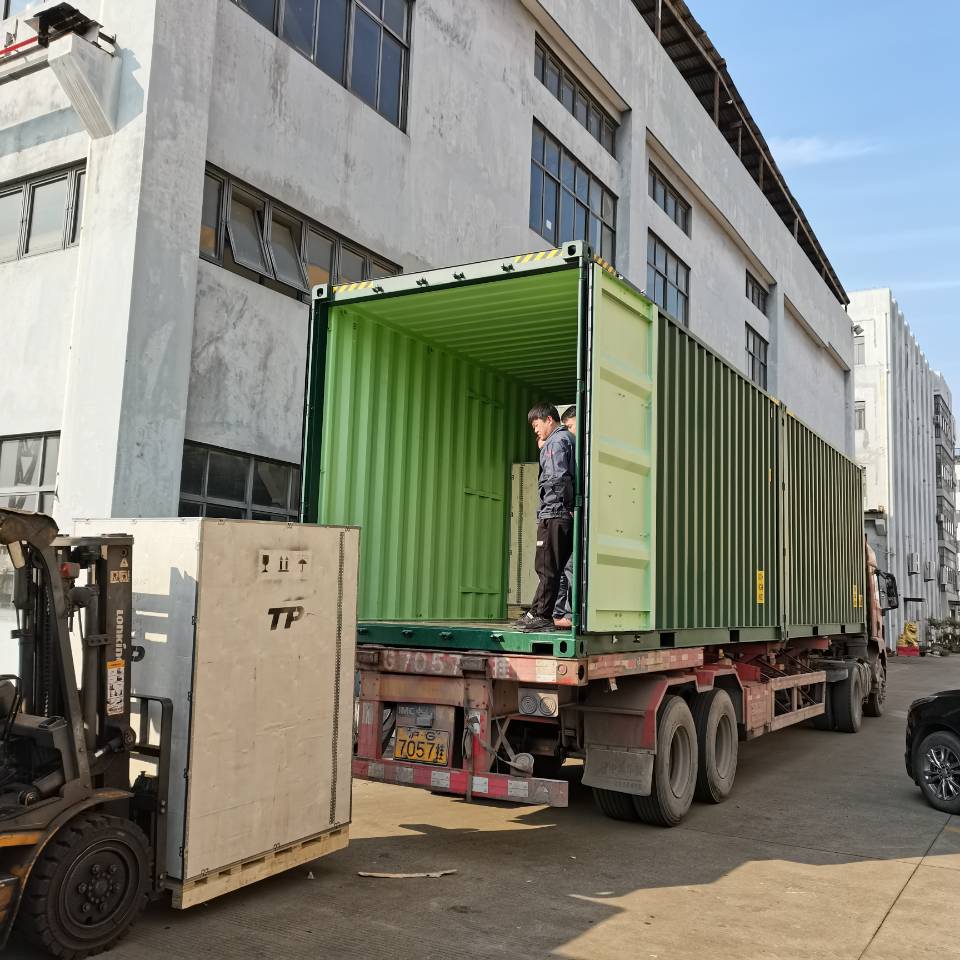
Monthly delivery of between 80 and 120 sets supports distributors planning installation against batch commitments.
Comparison Table: Output Tiers Side by Side
| Model | Output (capsules/min) | Output rank | Containment role | Best-fit production profile |
|---|---|---|---|---|
| CFM-7500 | 7,500 | 1 (highest output) | Standard | High-volume manufacturing where the batch plan consumes the full band |
| CFM-3500 / CFM-3500B | 3,500 | 2 | Standard | Multi-shift production with a stable product family |
| CFM-2000 | 2,000 | 3 | Standard | Mid-scale production and wide-format nutraceutical filling |
| CFM-1250 | 1,250 | 4 | Standard | Small-to-mid batch production and format-flexible filling |
| NJP-800A-HC | 800 | 5 | High containment, OEB4 | Potent products where containment screens first |
Ranking is by output band within the TPCF capsule filling machine range. It is not a ranking of capsule filling machine manufacturers.
| Selection dimension | Value across the range | What it changes in your decision |
|---|---|---|
| Die-bore count | Specified per model — request it before comparing tiers | Explains why two models at similar output can differ in mechanical speed and material handling |
| Rotary table | 12 stations | Determines indexing positions and the dwell time available for dosing and closing |
| Installed power | 7 kW, 7.5 kW or 12 kW depending on model | Drives electrical planning, utility cost and later line expansion |
| Capsule compatibility | 00# to 5# | Sets how many products one machine covers without extra change-part sets |
| Containment | Standard; OEB4 available on NJP-800A-HC | Screens potent products out of the standard tiers |
FAQ
What GMP and certification evidence should a buyer verify before committing to a long-term capsule filling machine supplier?
Compliance is the first filter because it cannot be retrofitted later. In the United States, pharmaceutical manufacturers must comply with 21 CFR Part 211, the Current Good Manufacturing Practice regulation for finished pharmaceuticals. On the equipment side, TPCF equipment complies with GMP standards and has obtained EU CE certification and ISO certificate, and third-party registry records list TPCF as holding ISO 13485, FDA and CE certifications. Buyers should attach this documentation to the specific model being qualified — CFM-1250, CFM-2000, CFM-3500/3500B, CFM-7500 or NJP-800A-HC — and keep it with the validation package.
Which capsule filling machine output tier fits which batch size?
The range is published as output bands rather than fixed batch sizes, so the mapping runs from demand to band. CFM-1250 covers 1,250 capsules/min, CFM-2000 covers 2,000 capsules/min, CFM-3500 and CFM-3500B cover 3,500 capsules/min, and CFM-7500 covers 7,500 capsules/min. For potent products the tier is set by containment rather than volume: the NJP-800A-HC runs 800 capsules/min in an OEB4 configuration. The practical rule is to size to the band your realistic per-hour requirement sits inside, after allowing for changeover, cleaning and rejects.
What drives the long-term cost of owning a capsule filling machine?
Four things dominate: format tooling and change parts, spares availability, installed power and footprint, and documentation. Installed power across the CFM range is 7 kW, 7.5 kW or 12 kW depending on model, which affects both utility cost and how much electrical headroom you keep for later expansion. Tooling and spares matter because a machine is only as available as its wear parts: TPCF provides tablet press punches and dies as part of its replacement tooling and spare parts offering, and possesses in-house expertise and equipment for developing various tablet press molds. Commercial terms vary with configuration, so pricing should be quoted against your specific model and format set rather than compared across a catalogue.
How should a buyer validate a machine before signing a long-term supply agreement?
Validation should use your own formulation rather than a demonstration powder, and it should test the formats you actually run across the 00#–5# range. Confirm the die-bore count and the 12-station rotary table configuration of the exact unit being quoted, verify containment performance if the product is potent, and review the compliance file. Because a capsule filling machine decision is a long-term commitment, the validation step is also the point to fix spares coverage and documentation expectations in writing. TPCF can be reached at michael@stctp.com or on WhatsApp at +8618017027102 to discuss a configuration review, and the capsule filling machine catalogue is available to download below.
What delivery capacity and export documentation should a long-term buyer plan for?
Between 80 and 120 sets of tablet presses and capsule filling machines can be delivered to customers each month, and TPCF provides equipment packaging and shipment documentation for exported tablet press and capsule filling machine orders. Because roughly half of the company's output is exported to Asia, South Africa, the Middle East, the EU, Russia and North and West Africa, export documentation is a routine part of the transaction rather than an exception — which matters when you are scheduling a line installation against a batch commitment.
Conclusion: Rank the Tier First, Then the Supplier
The output ladder is straightforward once the sequence is right. Containment first: if the product is potent, the NJP-800A-HC at 800 capsules/min in OEB4 is the tier. Then demand: compare your realistic per-hour requirement against the 1,250, 2,000, 3,500 and 7,500 capsules/min bands of the CFM-1250, CFM-2000, CFM-3500/3500B and CFM-7500. Then evidence: die-bore count, a 12-station rotary table, 7 kW / 7.5 kW / 12 kW installed power and 00#–5# capsule compatibility are the numbers that separate models sharing an output band.
Then the part that outlasts the purchase order. A capsule filling machine is a long-term asset inside a long-term supplier relationship: tooling and wear parts, spares availability, a delivery rhythm of between 80 and 120 sets per month and export documentation all determine how many capsules you actually produce over the ownership period. TPCF manufactures in-house, with more than 200 advanced CNC machine tools and full capabilities in mechanical design, machining, assembly, commissioning and testing, and has completed the production and delivery of 30 automatic capsule filling machines for a single pharmaceutical production project.
If your batch plan sits between two tiers, the right next step is a configuration review rather than a speed upgrade.
Next Step: Match the Tier to Your Batch Plan
Send your target batch size, capsule sizes and containment requirement, and TPCF will recommend an output tier — CFM-1250, CFM-2000, CFM-3500/3500B, CFM-7500 or the NJP-800A-HC OEB4 option — instead of the highest number on the list.
Contact: Michael Zhao · Email: michael@stctp.com · WhatsApp: +8618017027102 · Website: www.tp-tabletpress.com
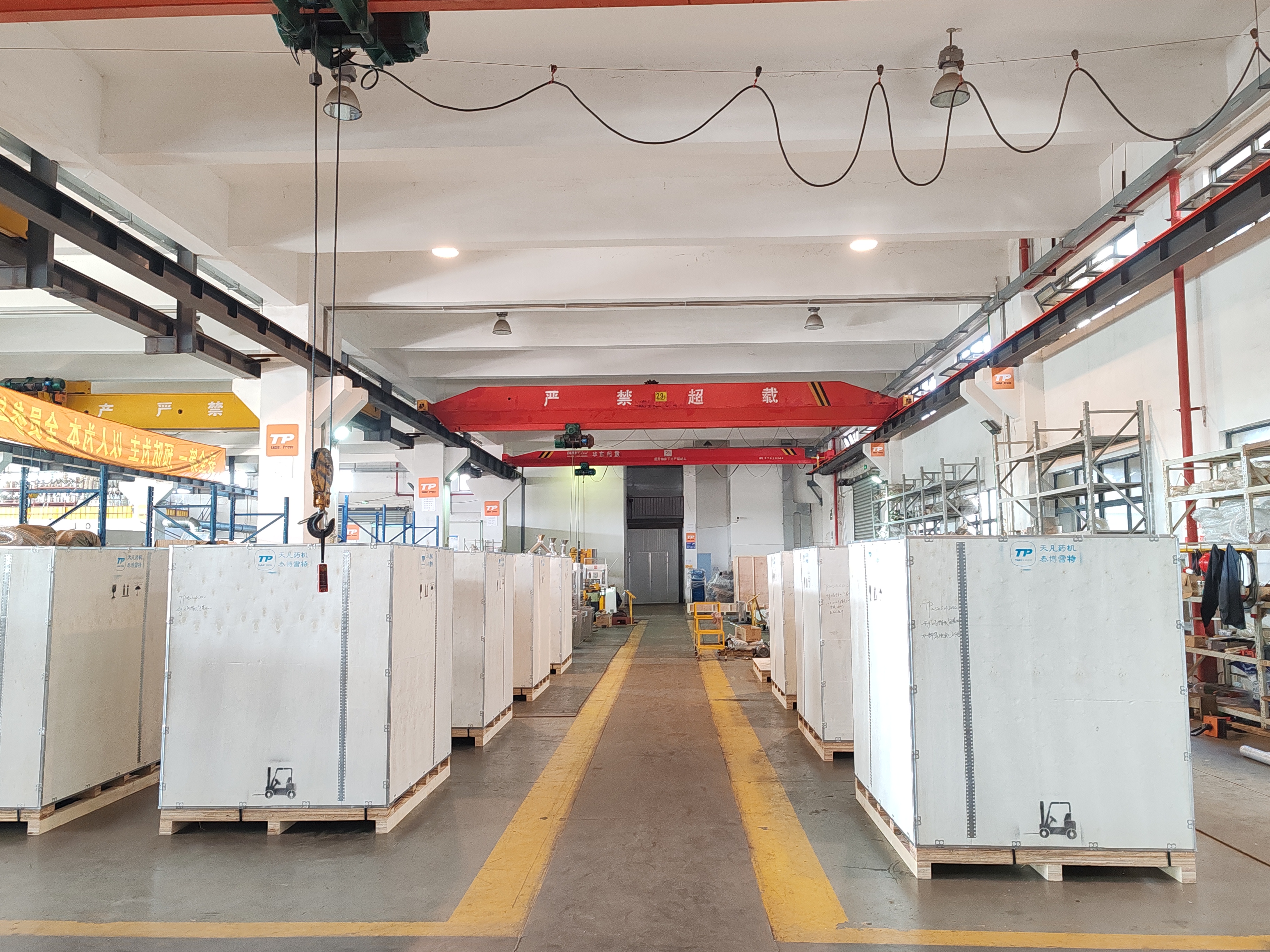
Export orders ship with equipment packaging and shipment documentation as standard.
Have Questions or Need More Details?
Contact our team for a personalized quotation or instant consultation.
Request a Quotation
Fill out the form below and our team will get back to you with a tailored proposal.
WhatsApp Direct Chat
Prefer to chat in real-time? Message us on WhatsApp for instant assistance & quick answers.
- Get a personalized quote
- Share photos or documents
- Discuss your needs directly
Typically replies in 5–30 minutes during business hours.