
Single Punch Tablet Press: Buyer's Guide to Selection and Scale-Up
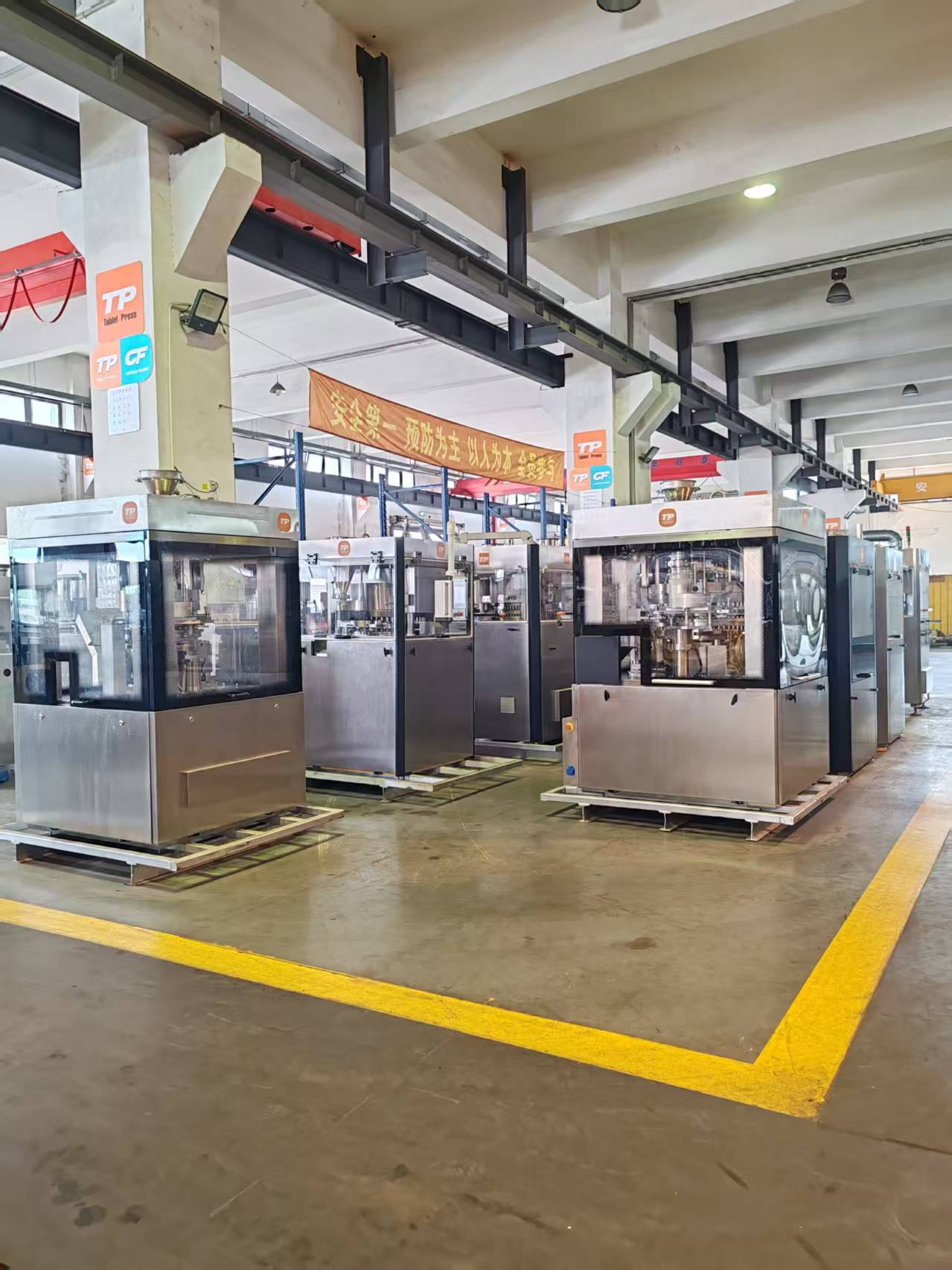
A single punch tablet press compresses one tablet per cycle from one punch-and-die station. It is the simplest machine class in tablet manufacturing and, for many buyers, the first press they purchase: formulation laboratories, university and contract research teams, herbal and nutraceutical start-ups, veterinary and specialty chemical producers, and pilot lines that need to prove a tablet before committing to a rotary press.
The difficult part is not understanding what the machine does. It is deciding whether a single punch press, a compact rotary press, or an R&D rotary press is the right entry point for your tablet, your batch size, and the production scale you expect to reach over the next two to three years.
Shanghai Tablet Press Mechanical Components Co., Ltd. (TPCF) is a Shanghai-based manufacturer of tablet press machines, tablet press punches and dies, and capsule filling machines. Its product range begins with the smallest single-punch tablet presses and laboratory tablet presses and extends to fully automatic high-speed rotary presses. This guide explains where single punch machines sit inside that range and how to evaluate them against real buying criteria rather than catalogue adjectives.
Problem Definition: Why Single Punch Press Decisions Go Wrong
A single punch tablet press, also described as a single-station press and known in some markets as a TDP-style press, uses one punch and one die. Each cycle fills the die, applies one compression stroke, and ejects one tablet. Output is therefore a function of cycle time rather than turret speed, which is why single-station machines are used where flexibility and material economy matter more than throughput.
Three failures account for most poor purchases in this class.
1. Sizing the press to the first batch instead of the second product. A machine bought for one formulation frequently cannot accept a larger tablet, a harder formulation, or a multilayer structure later. The buyer then repeats the purchase instead of scaling it.
2. Treating compression force and tooling as separate decisions. The tooling standard (D, B, BB, BBS, ZP, ZPT) determines which tablet shapes and diameters are possible. The machine frame determines how much force can be applied. Both must be settled together, or a correct press will still produce tooling that does not fit its task.
3. Assuming GMP compliance is a label rather than a design package. Compliance is a combination of contact materials, cleanability, dust control, and documentation. It is decided at specification stage, not at delivery.
A further source of confusion sits in the search itself. Buyers searching for a tablet press often compare machine outputs that differ by two orders of magnitude, from a few thousand tablets per hour on a small press to hundreds of thousands on a high-speed rotary platform. The machine class must be chosen before the model number.
Industry Background: A Multi-Scale Market Under Compliance Pressure
Commercial market research estimates the global tablet press machine market at USD 1.52 billion in 2025, with Fette Compacting reported as holding the largest global share above 9% in the same year. Those figures describe a market that is served at very different scales: single-station laboratory machines at one end and high-speed multi-station platforms at the other. Single punch and small rotary presses are not a declining niche; they are the entry point of the supply chain.
Regulation is the second force shaping purchases. In the European Union, CE marking remains the mandatory conformity marking for machinery under Directive 2006/42/EC. Regulation (EU) 2023/1230 repeals and replaces that Directive and applies from 20 January 2027, so equipment specified today will be evaluated against a framework that changes during its service life. In the United States, 21 CFR Part 11 sets the criteria under which electronic records and electronic signatures are treated as trustworthy and equivalent to paper records, which becomes relevant as soon as a press feeds batch documentation. EU GMP Annex 11 applies a risk-based approach to computerised systems used in GMP-regulated manufacture, and ISO 9001:2015 remains the common quality management reference cited by equipment suppliers.
Trade classification matters for landed cost. In a 2002 ruling, US Customs classified tablet presses under HS 8479.89.9897, which is a useful reference point when building an import cost model.
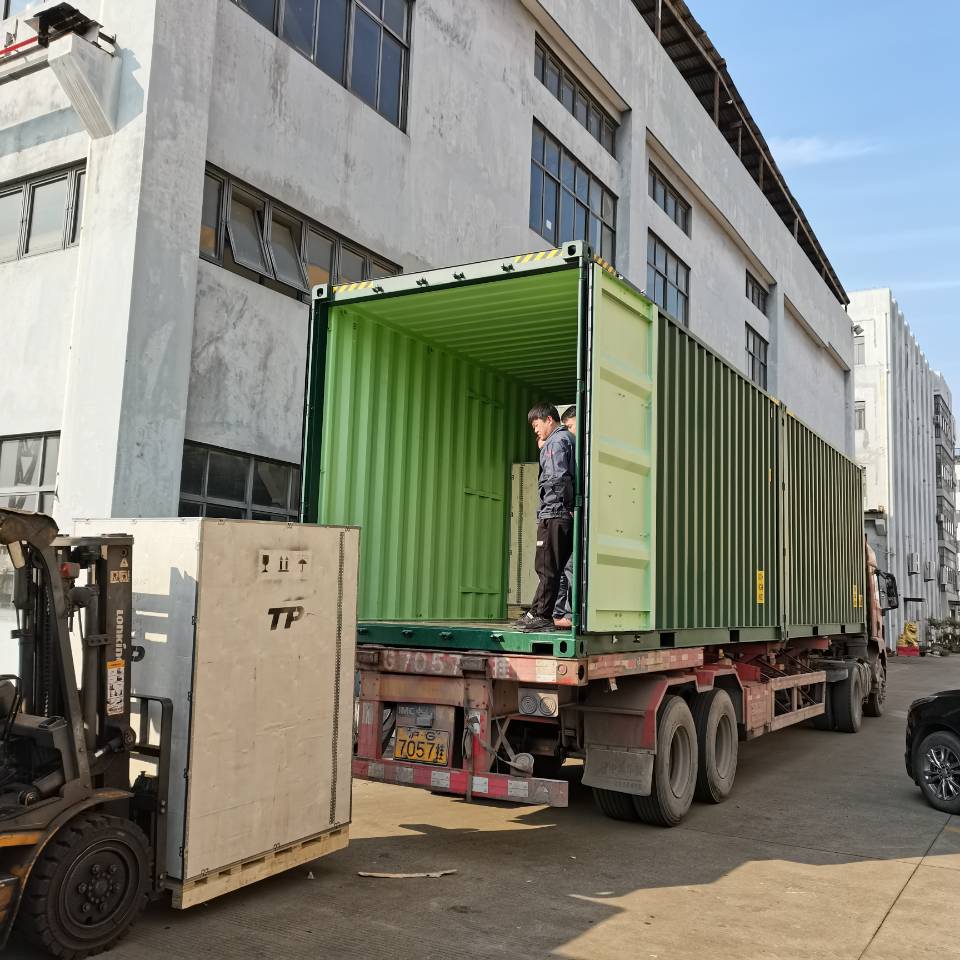
On the supply side, China is a major manufacturing base for tableting equipment. TPCF has exhibited at international pharmaceutical industry events, including INTERPHEX 2024 in New York, and its markets include Asia, South Africa, the Middle East, the EU, Russia, and North and West Africa, with export business accounting for about 50% of sales.
Detailed Solution: How TPCF Covers Single Punch Through High-Speed Tableting
The manufacturing base behind the machines
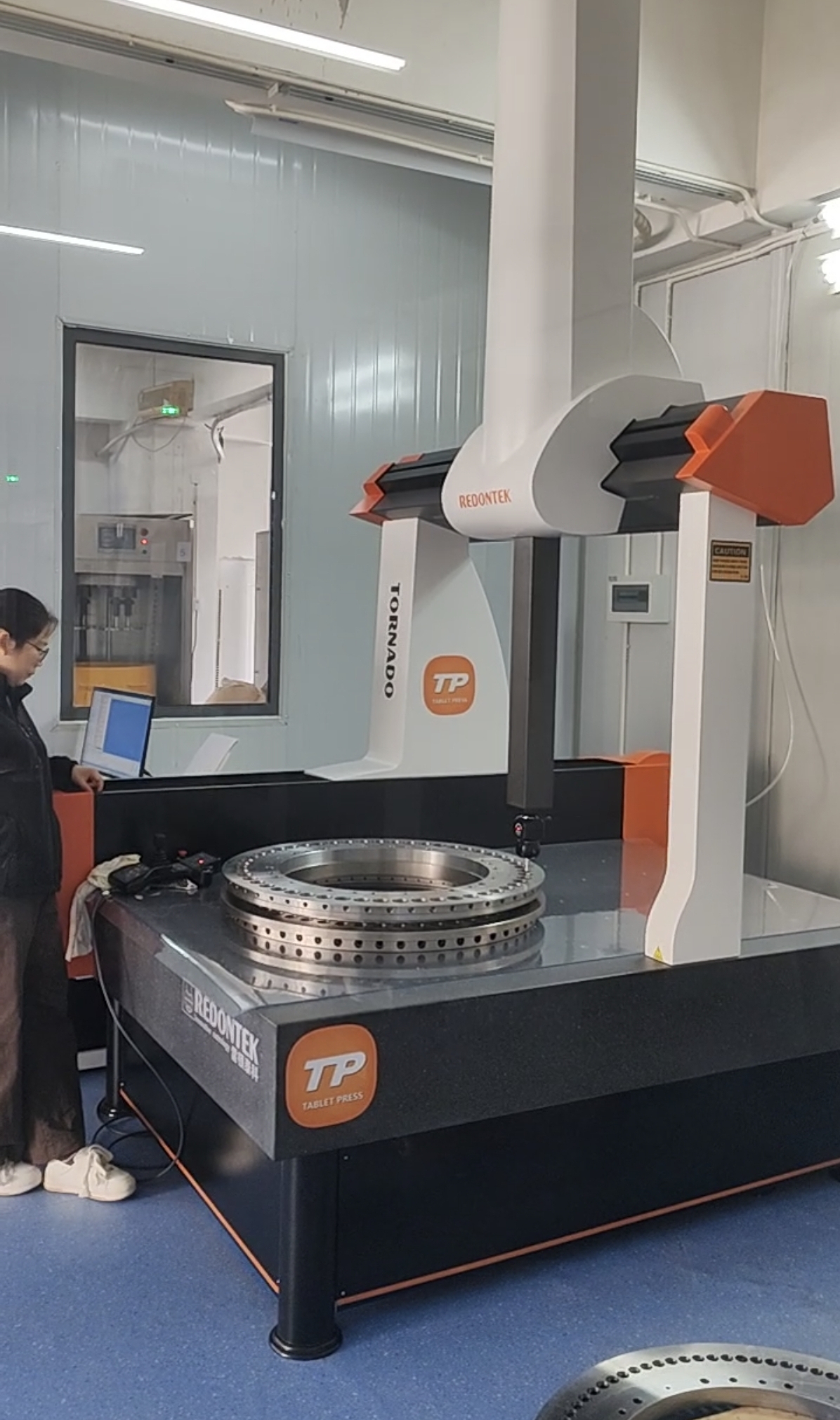
TPCF was registered in 2009 and traces its roots to 1978, when it operated as Shanghai Tianma Pharmaceutical Machinery Parts Factory. In 2002 the original core team and technical engineering staff built Shanghai Tianfan Pharmaceutical Machinery Factory, and in 2009 the owner established the current company, moving into the new factory in 2015. The facility covers a building area of 15,000 square meters and employs approximately 260 staff, including 15 R&D engineers.
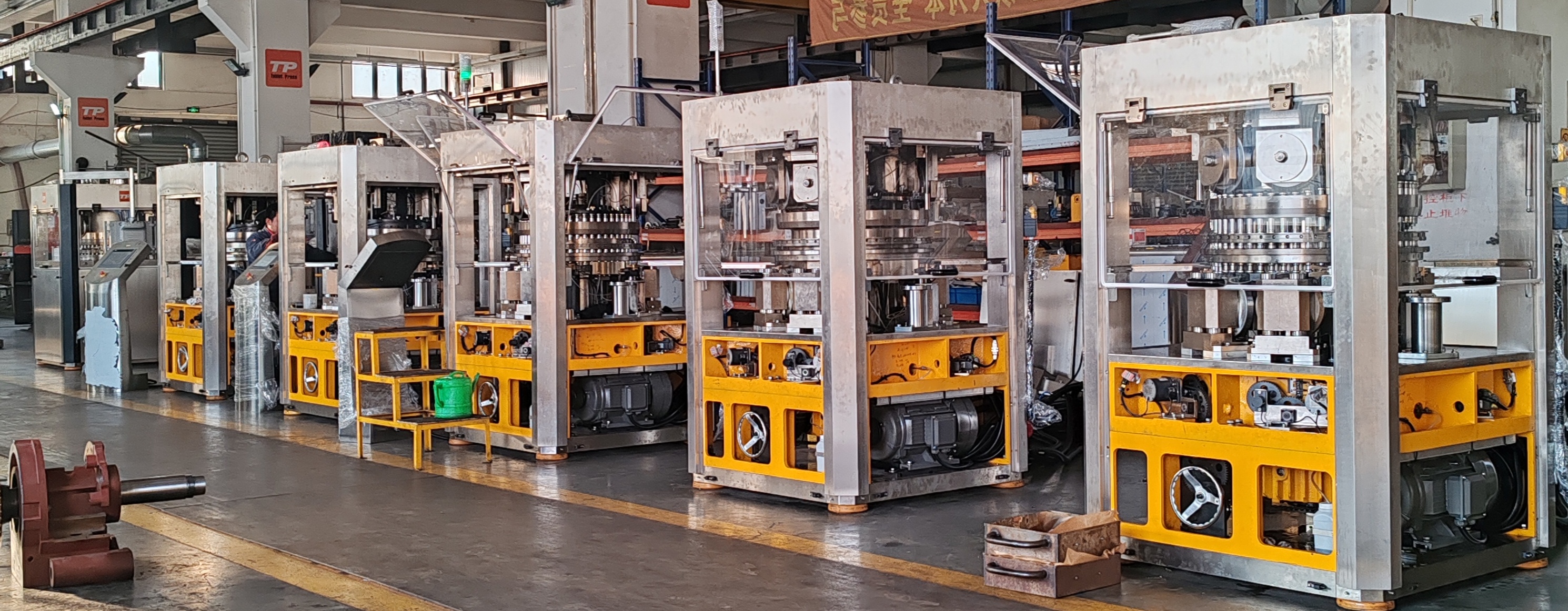
Machining capacity is central to tablet press quality. The workshop is equipped with more than 200 CNC machine tools, including engraving machines, coordinate measuring machines, and coordinate grinders. The company holds full in-house capability in mechanical design, machining, assembly, commissioning, and testing, together with the expertise and equipment to develop tablet press moulds. Annual production capacity reaches 1,500 sets, and 80 to 120 sets of tablet presses and capsule filling machines can be delivered to customers each month.
The company states that its equipment complies with GMP standards and has obtained EU CE certification and an ISO certificate. As with any supplier certification claim, buyers should confirm certificate numbers, issuing bodies, and the scope of certification during vendor qualification.
The machine range: single punch as the entry point
The portfolio covers a full span of models, from the smallest single-punch tablet presses, laboratory tablet presses, and medium-to-low speed tablet presses, up to fully automatic high-speed tablet presses, with a stated maximum output at the top of the range of 10,000 tablets per minute. Alongside presses, the company produces capsule filling machines from the small-scale NJP-200 through to the high-volume CFM7500.
The equipment serves pharmaceutical manufacturers as well as the food, chemical, electronics, and powder metallurgy industries. Documented tablet applications include pharmacy medicine tablets, effervescent tablets, seasoning bouillon cubes, broth cubes, salt tablets, chlorine tablets, dishwasher tablets, laundry detergent tablets, toilet bowl cleaning tablets, fertilizer tablets, mint candy tablets, bath bomb tablets, catalyst tablets, naphthalene tablets, camphor tablets, veterinary tablets, and resistor tablets.
The die table: the component that decides contamination risk
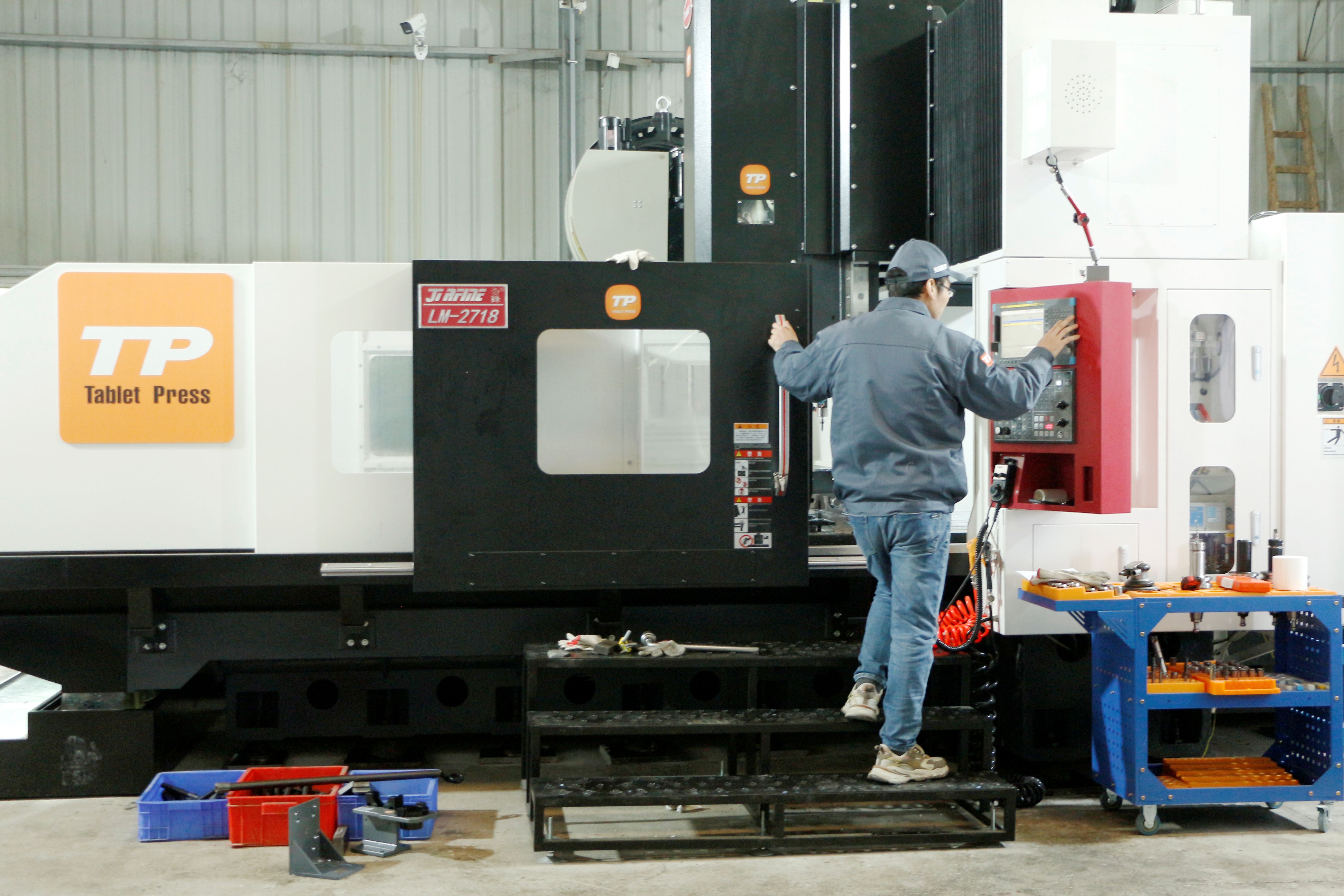
On rotary models and on the larger special-purpose presses, TPCF uses a one-piece 2Cr13 stainless steel die table that requires no nickel plating. 2Cr13 is a martensitic stainless steel, equivalent to AISI 420, with a tensile strength of 635 to 750 MPa or higher, a yield strength of at least 440 MPa, and a core hardness of 45 to 55 HRC and above after quenching and tempering, supported by 12% to 14% chromium content.
The practical difference appears against nickel-coated cast iron. A nickel layer is a surface coating: under continuous friction and impact it can crack, chip, or peel, and once it is scratched through, the softer iron substrate below wears quickly. Micro-porosity in the coating also allows moisture to reach the iron, producing under-film corrosion that disturbs table flatness. A 2Cr13 die table has no coating to delaminate, resists corrosion through a self-passivating oxide layer, and can be re-ground when it eventually wears, instead of being stripped and re-electroplated.
Tooling: the part of the purchase that is usually under-specified
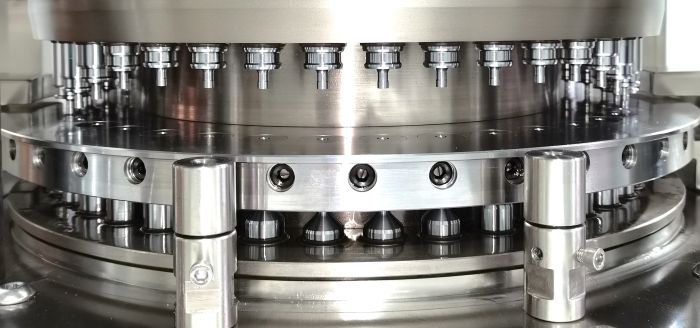
TPCF manufactures tablet press punches and dies custom-made to technical drawings or physical samples and covers D, B, BB, BBS, ZP, and ZPT standard tooling systems. Punches are made from S7 or 6CrW2Si steel and dies from D2 or GCr15, with optional chrome, CrNi, TiNi, and DLC punch coatings available to improve wear resistance, corrosion resistance, and anti-sticking performance. Dies are not coated.
Feeding, dust extraction, and sticking control
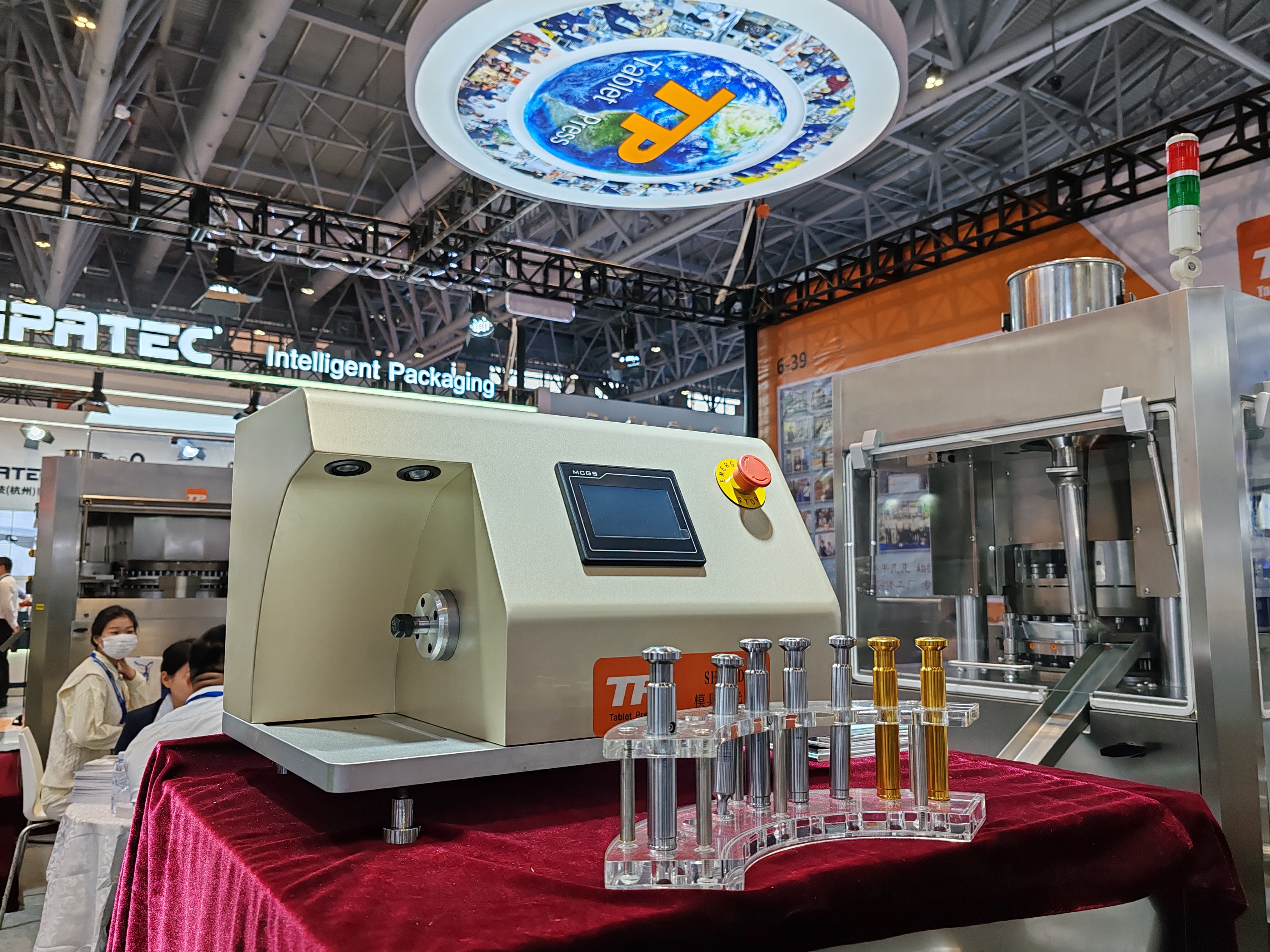
A press alone rarely solves a production problem. TPCF supplies the auxiliary equipment that determines whether a line runs cleanly:
- QVC-3 Vacuum Conveyor. A vacuum feeder for tablet presses with a conveying capacity of 350 kg, working air pressure of 0.6 MPa, air consumption of 180 L/min, dimensions of Φ140 × 560 mm, and a weight of 35 kg. It uses an SS316 filter and automatically conveys powder to the tablet press hopper.
- XCJ-1.1 Industrial Dust Collector. Airflow of 360 m³/h, minimum vacuum of 19,500 Pa, total power of 1.1 kW, dimensions of 700 × 460 × 1030 mm, and a weight of 70 kg. It extracts residual material from the die table and reduces the risk of residue re-entering die bores.
- CF-1 Anti-Sticking Powder Sprayer. A 380 V three-phase unit rated at 0.2 kW with dimensions of 710 × 512 × 1430 mm, requiring 0 to 0.3 MPa air pressure and weighing 100 kg. It sprays magnesium stearate or another anti-sticking powder onto upper and lower punches to form a thin film, which reduces sticking with sugar-based, effervescent, or catalytic materials.
- LG Series Roller Compactor (Dry Granulation). A horizontal-feeding compactor producing a finished particle size of 10 to 80 mesh, with documented capacities from 1.5 to 15 kg/h on the LG100 up to 1,500 to 3,000 kg/h on the LGS500. It converts powder directly into granules without binder, water mixing, or drying, using water-cooled pressure rollers to protect heat- or moisture-sensitive materials.
Step-by-Step: How to Specify a Single Punch or Small-Scale Tablet Press
Step 1. Define the tablet before the machine. Record tablet diameter, thickness, target weight, target hardness, layer structure, and material behaviour, including moisture sensitivity, heat sensitivity, and stickiness.
Step 2. Convert the tablet into a compression force requirement. Documented reference points across the TPCF range make this easier: the compact rotary ZPT168 series is rated at 50 kN maximum main compression; the R&D rotary ZPTX226 series at 80 kN main compression with 16 kN pre-compression; the heavy-duty single-outlet ZPTX340 series at up to 120 kN; and the ZPTX420-17G large-tablet bilayer press at 150 kN.
Step 3. Fix the tooling standard before ordering the machine. Confirm whether D, B, BB, BBS, ZP, or ZPT tooling applies, whether custom punches are required from drawings or samples, and whether a punch coating is justified by the formulation.
Step 4. Match output to the commercial batch, not the laboratory batch. Documented output levels span 7,800 to 21,600 tablets per hour on the compact ZPT168 series, 14,400 to 44,100 tablets per hour on the R&D ZPTX226 series, 43,200 to 75,600 tablets per hour on the heavy-duty ZPTX340 series, 378,000 to 624,000 tablets per hour on the GZPK620i high-speed series, and up to 658,800 tablets per hour single-layer on the GZPK1060 series.
Step 5. Plan feeding, dust, and sticking control at the same time. Vacuum conveying, dust extraction, and anti-sticking treatment are specified with the press, not after commissioning.
Step 6. Confirm the materials and hygiene package. Ask what the die table is made from, which parts contact the product, and how the enclosure is finished. The ZPTX420-17G, for example, combines a 2Cr13 die table with SS316 force-feeder walls, impellers, hopper, and other major product-contact parts and an SS304 enclosure.
Step 7. Check the compliance documents you will actually need. CE marking is required for machinery placed on the EU market under Directive 2006/42/EC today, with Regulation (EU) 2023/1230 applying from 20 January 2027. If electronic batch records are used, 21 CFR Part 11 and EU GMP Annex 11 expectations for audit trails and electronic signatures should be written into the specification.
Step 8. Verify supply capacity and schedule in writing. TPCF has an annual production capacity of 1,500 sets and can deliver 80 to 120 sets per month. Ask for a written schedule covering the press, tooling, and auxiliary equipment, together with inspection milestones.
Use Cases: Which Products Run on Which Machine
- Formulation and feasibility work. R&D and laboratory tablet presses such as the ZPTX226 series are designed for formulation development and pilot-scale production, with 16 kN pre-compression and a compact construction compatible with multiple tooling standards. The ZPT168 compact series, powered by a 220 V single-phase supply, is convenient where only single-phase power is available.
- Small-batch and pilot production. Compact single-outlet machines handle small-batch and pilot production orders where frequent parameter changes and cleaning between trials are normal.
- Nutraceutical and vitamin tablets. Double-outlet rotary presses such as the ZPT420 series are documented for granule material compression and nutraceutical tablet manufacturing.
- Effervescent and moisture-sensitive formulations. LG Series dry granulation converts powder to 10 to 80 mesh granules without water or solvent, protecting active content before tableting.
- Dishwasher and laundry tablets. The ZPTX420-17G strengthened version is a heavy-duty single- and bilayer press for large special-shaped tablets, producing 36.5 × 26.5 × 13 mm tablets at approximately 8,000 to 16,320 tablets per hour.
- Chlorine, salt, and toilet-cleaner tablets. The same large-tablet platform is documented for chlorine tablets, water-softener salt tablets, and toilet-cleaner tablets, using a 2Cr13 die table and SS316 contact parts for corrosive or abrasive products.
- Multi-layer development. The ZPT680C triple-layer composite press is configured with three compression layers and produces 9,720 to 21,060 or 28,800 to 72,000 tablets per hour depending on configuration.
- Candy, mint, bouillon, catalyst, and industrial tablets. Documented applications include mint candy tablets, seasoning bouillon cubes, broth cubes, catalyst tablets, fertilizer tablets, bath bomb tablets, naphthalene and camphor tablets, veterinary tablets, and resistor tablets.
Comparison Table: Documented Configurations Across the TPCF Range
The table below uses only documented configuration data for TPCF machine families. It is arranged from the smallest class upward, so that a buyer can see where a single punch or compact press stops and where a production platform begins.
| Machine class | Stations | Max. main compression | Documented max. output | Notable documented details |
|---|---|---|---|---|
| Single punch tablet press (single-station class) | One punch-and-die station | Not stated in the source data | Not stated in the source data | Documented as the smallest class in the TPCF range; suited to formulation trials and very small batches |
| Compact rotary tablet press — ZPT168-5 / ZPT168-7 / ZPTX226-10 / ZPT226-12 | 5 / 7 / 10 / 12 | 50 kN | 7,800 / 10,920 / 15,600 / 21,600 tablets/h | 220 V single-phase, 2.2 kW, 320 kg, one discharge outlet, HMI speed and output display, optional force feeder and punch-hole seals |
| R&D rotary tablet press — ZPTX226-8 / -16 / -17 / -19 / ZPT226-21 | 8 / 16 / 17 / 19 / 21 | 80 kN (16 kN pre-compression) | 14,400 – 44,100 tablets/h | One-piece 2Cr13 die table without nickel plating, 4 kW, 900 kg, for R&D and pilot-scale production |
| Heavy-duty single-outlet rotary — ZPTX340-24 / -29 / -36 | 24 / 29 / 36 | 120 / 100 kN (20 kN pre-compression) | 43,200 / 60,900 / 75,600 tablets/h | One-piece 2Cr13 die table, 5.5 / 7.5 kW, 1,800 kg, optional force feeder and automatic lubrication |
| Double-outlet rotary — ZPTX420 series and ZPTY550 / ZPTY500 series | 29 – 59 | 100 – 120 kN | 104,400 – 318,600 tablets/h | Two discharge outlets; optional automatic weight control (AWC) and reject-tablet removal |
| High-speed double-outlet intelligent — GZPK620i-45 / -55 / -65 | 45 / 55 / 65 | 100 kN (30 kN pre-compression) | 378,000 / 528,000 / 624,000 tablets/h | Standard single-layer configuration with optional bilayer capability; AWC and reject-tablet removal |
| High-speed multi-outlet — GZPK1060-76 / -95 / -113 / -122 | 76 / 95 / 113 / 122 | 100 / 100 kN | 342,000 – 658,800 tablets/h single layer; 114,000 – 219,600 tablets/h triple layer | Three discharge outlets, 11 kW, 8,000 kg, single-layer or triple-layer tablets |
| Large-tablet bilayer press — ZPTX420-17G strengthened version | 17 | 150 kN (100 kN pre-compression) | Approx. 8,000 – 16,320 tablets/h | 1 or 2 layers, 36.5 × 26.5 × 13 mm tablets, 9 – 14 mm thickness, 2Cr13 die table, SS316 contact parts |
| Triple-layer composite press — ZPT680C-27 / ZPT680C-48/58/68 | 27 / 48 / 58 / 68 | 150 kN across the three combined layers | 9,720 – 21,060 or 28,800 – 72,000 tablets/h | 3 compression layers, 100 kN pre-compression for the first and second layers, customizable tablet size |
One observation is worth stating plainly. The single-station class is the only row in this table without published station counts or output figures, because those values depend entirely on the specific model and tooling configuration. Any buyer comparing single punch machines should request model-level specifications rather than relying on category-level descriptions.
Frequently Asked Questions
Are single punch and small tablet presses GMP compliant, and what documentation should buyers verify?
GMP compliance is a property of design, contact materials, cleanability, and documentation rather than of machine class, so a single punch press and a high-speed rotary press are assessed on the same criteria. TPCF states that its equipment complies with GMP standards and has obtained EU CE certification and an ISO certificate. Buyers should verify certificate numbers, issuing bodies, and scope during qualification. For EU market access, CE marking is currently required under Directive 2006/42/EC, and Regulation (EU) 2023/1230 replaces that Directive and applies from 20 January 2027. Where electronic batch records are used, 21 CFR Part 11 in the United States and EU GMP Annex 11 set expectations for audit trails and electronic signatures.
What is the difference between a single punch tablet press and a rotary tablet press?
A single punch tablet press has one punch-and-die station and produces one tablet per cycle, so output is governed by cycle time. A rotary tablet press carries multiple stations on a rotating turret and produces one tablet per station per revolution. The difference is visible in documented output: the compact rotary ZPT168 series runs from 7,800 to 21,600 tablets per hour with 5 to 12 stations and 50 kN maximum main compression; the R&D rotary ZPTX226 series reaches 14,400 to 44,100 tablets per hour with 16 kN pre-compression; and the GZPK1060 high-speed series reaches up to 658,800 tablets per hour single-layer with 76 to 122 stations. Single punch and compact rotary machines suit formulation work and very small batches; rotary machines suit weight consistency and production scale.
Who are China tablet press manufacturers, and how should buyers shortlist them?
China hosts a large tablet press manufacturing base, and TPCF — Shanghai Tablet Press Mechanical Components Co., Ltd. — is one example. The company was registered in 2009 and traces its roots to 1978; it operates from a 15,000 square meter facility at No. 159 Zhujiabang Rd., Xiao Kun Shan Town, Songjiang District, Shanghai, employs approximately 260 staff including 15 R&D engineers, runs more than 200 CNC machine tools, and reports annual production capacity of 1,500 sets with 80 to 120 sets delivered per month. A practical shortlist checks four things: documented model-level specifications, in-house tooling capability across D, B, BB, BBS, ZP, and ZPT standards including custom punches made to drawings or samples, in-house machining, assembly, commissioning and testing, and verifiable certification documentation.
How is delivery capacity confirmed when ordering from an overseas manufacturer?
Capacity should be confirmed as a written schedule rather than an assurance. TPCF states that 80 to 120 sets of tablet presses and capsule filling machines can be delivered to customers each month, against an annual production capacity of 1,500 sets. Actual lead time depends on the press model, tooling, and whether auxiliary equipment such as a QVC-3 vacuum conveyor, an XCJ-1.1 dust collector, or a CF-1 anti-sticking powder sprayer is included, as well as whether non-standard contact materials or control options are specified. Ask for a schedule that separates machine build, tooling manufacture, factory testing, and shipment.
How do I obtain specifications, tooling support, and a quotation?
Send the tablet specification first — diameter, thickness, target weight and hardness, layer structure, batch size, and material behaviour — and ask for a documented model recommendation rather than a general price list. TPCF manufactures tablet press machines, punches and dies, capsule filling machines, and supporting equipment including dry granulation, vacuum conveying, dust extraction, and anti-sticking systems, and can quote a package rather than a single unit. The product brochure can be downloaded here: TPCF product brochure (PDF).
Next Step: From Shortlist to Specified Machine
Most single punch and small rotary purchases go wrong because the tablet specification is never written down before the machine is chosen. Write the tablet specification, the batch size, and the scale-up path first, then ask the manufacturer to respond to those three documents.
Contact TPCF directly with your tablet data:
Name: Michael Zhao
Email: michael@stctp.com
WhatsApp / Tel: +86 180 1702 7102
Website: www.tp-tabletpress.com
Address: No. 159 Zhujiabang Rd., Xiao Kun Shan Town, Songjiang District, Shanghai, China
Conclusion
A single punch tablet press is the correct answer when the task is proving a formulation, producing very small batches, or working with expensive or scarce material. It becomes the wrong answer the moment weight consistency, output, or multi-layer structure enters the requirement, because a rotary platform is then the appropriate class. The decision is therefore not which single machine to buy, but which supplier can carry you from the first trial batch to the production platform without a change of partner.
That is the practical argument for evaluating the whole range rather than a single model. TPCF covers single-punch and laboratory presses, compact and R&D rotary presses, heavy-duty and high-speed rotary presses, bilayer and triple-layer platforms, custom punches and dies, and the dry granulation, vacuum conveying, dust extraction, and anti-sticking equipment that makes a line work. Documented specifications across that range, from 50 kN compact presses to 150 kN large-tablet presses and up to 658,800 tablets per hour on high-speed platforms, give buyers a scale-up path that can be planned instead of improvised.
Have Questions or Need More Details?
Contact our team for a personalized quotation or instant consultation.
Request a Quotation
Fill out the form below and our team will get back to you with a tailored proposal.
WhatsApp Direct Chat
Prefer to chat in real-time? Message us on WhatsApp for instant assistance & quick answers.
- Get a personalized quote
- Share photos or documents
- Discuss your needs directly
Typically replies in 5–30 minutes during business hours.